
WNAT students learn life-saving skills
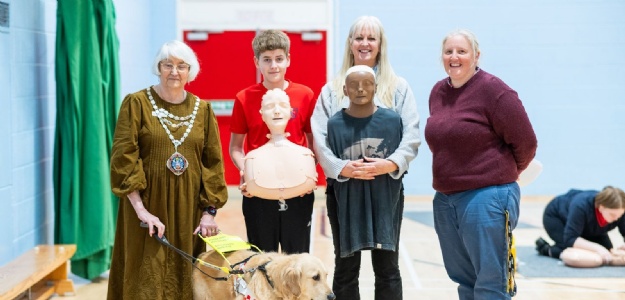
Lessons in life-saving were on the timetable at a WNAT school, when students undertook vital first aid training – thanks to funding from the Town Council.
An impressive 150 Year 9 and 10 students at Smithdon High School completed the sessions, which took place across a two-day period.
“Over the past seven years, we have applied for several grants that have allowed us to have the most trained youngsters in first aid in the area,” said Alysha Moat, Assistant Head of Key Stage 3, who helped organise the event.
“We applied for a grant from the Town Council, who kindly paid for all of Year 9 to take part. We want to have as many youngsters as possible trained as we can in the area.”
The programme was delivered by RCR Services, which provides training in first aid, health and safety, and fire safety, and has been working with Smithdon for the past six years.
Skills covered included basic first aid, as well as training in automated defibrillator use, Epi Pens, CPR (cardio-pulmonary resuscitation), and how to treat cuts, bleeds, and burns.
“This is an element of the Personal, Social, Health, and Economic Education (PSHE) Curriculum,” continued Ms Moat.
“This qualification has helped them with their GCSE subjects, such as Health and Social Care, their Duke of Edinburgh Awards, PSHE Curriculum, Science, and Award Scheme Development and Accreditation Network (ASDAN), et cetera.”
As well as receiving financial support from Hunstanton Town Council, the first-aiders were supported in person during the training by Mayor Cynthia Easeman and Deputy Mayor Mark Williamson.
“The Mayor and Deputy Mayor both attended to see what the students were up to,” explained Ms Moat. “The Mayor said they both thoroughly enjoyed the time spent watching, learning, and chatting to the students.”
“Events like this are massively important,” she added. “Completing the course allows students to learn life-long, valuable skills, and boost their CV, having a bigger impact on the students’ aspirations, attitudes, and behaviours in and outside school.
“It also provides the local community with many more qualified people in first aid – a vital thing, considering the current crisis the NHS is in.”