
WNAT students gear up for engineering challenge
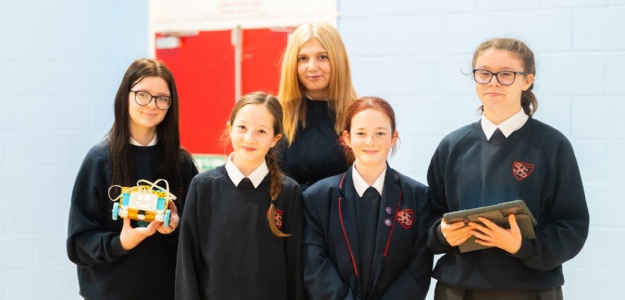
It was full speed ahead, when aspiring engineers at a WNAT school in Hunstanton were tasked with designing, building, testing, and even marketing their own self-driving vehicles.
Sixty Year 10 students at Smithdon High School were put through their paces at the Smallpiece Trust Autonomous Vehicle Challenge STEM (Science, Technology, Engineering, and Maths) Day on Friday 16 January, which saw them work in small teams to both create and pitch their designs.
“The event was run by staff from the Smallpiece Trust, who came in armed with several STEM Lego Spike Kits and iPads, testing tracks, and more,” said organiser Sam Fairweather, who is Lead for both Careers and Information and Communication Technologies (ICT) at the school.
“In this particular challenge, students were split into teams, and self-selected certain roles within the group to compete against other teams to design, build, and code a working, autonomous vehicle that had to be programmed to navigate, avoid obstacles, and respond to scenarios.
“Not only this, but students also had to pitch their designs, which focused on teamwork, marketing, and understanding real-world engineering problems.”
It was the first time that the event had taken place at Smithdon, but Taionee Rhodes and Daniel Foulsham from the Smallpiece Trust are scheduled to return in a few months, so that the rest of Year 10 can test their engineering prowess too.
“Fortunately, I have managed to secure another booking for May, which will see the remaining students in Year 10 getting their opportunities to complete a similar event too, that time on wind turbines,” continued Miss Fairweather.
“The project is designed to bring real-world applications of STEM subjects to the classroom, sparking an interest through fun, hands-on activities.
“It’s a way of encouraging students to look at the possibilities for a career in engineering, and help them to build life and leadership skills that can be used throughout all aspects of life.”
“Events like the Smallpiece Trust Autonomous Vehicle Challenge are important because they give students the chance to experience real-world engineering and technology in a practical, engaging way,” she added.
“Rather than just learning theory in the classroom, students can see how subjects like maths, science, computing, and design work together to solve complex, real problems.
“For students, the benefits are wide-ranging. They develop key skills such as teamwork, problem-solving, critical thinking, and communication, all of which are essential for further education and careers. Taking part in an engineering challenge also helps build confidence, resilience, and creativity, as students must test ideas, learn from mistakes, and adapt their designs.
“Importantly, events like this can inspire students by exposing them to cutting-edge technologies such as autonomous vehicles, and showing clear links between school subjects and exciting career pathways.
“For many students, it can spark a lasting interest in STEM and help them make more informed choices about GCSEs, A-Levels, apprenticeships, or future careers in engineering and technology.”